

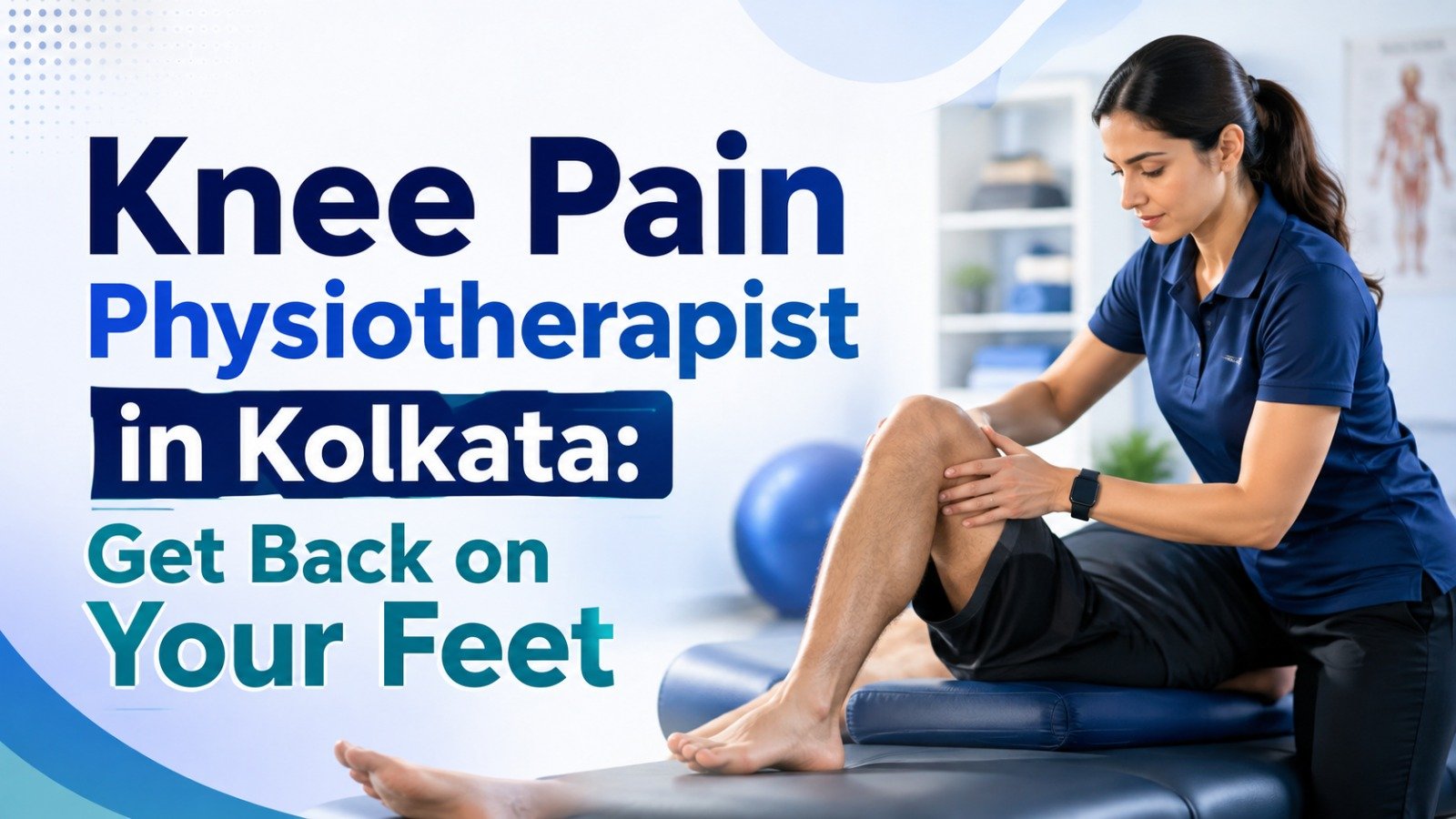
Every step hurts. Getting up from a chair, climbing stairs, even standing in the kitchen knee pain turns small daily tasks into ordeals. If you’ve been living with this, seeing a knee pain physiotherapist in Kolkata is one of the most practical decisions you can make. This article explains what causes knee pain, how physiotherapy treats it, what you can do at home, and when it’s time to stop waiting and book an appointment.
Why Knee Pain Is So Common and So Often Misunderstood
Knee pain doesn’t always start with an injury. For many people in Kolkata, it builds quietly from years of sitting, stair climbing, carrying weight, or simply getting older. The knee is the largest joint in the body, and it absorbs enormous pressure with every step. Conditions like osteoarthritis, ligament strain, runner’s knee, and bursitis all show up as “knee pain,” but they have different causes and need different treatment. Physiotherapy in South Kolkata has become a go-to solution because it treats the root cause, not just the symptom.
How Physiotherapy Treats Knee Pain
A physiotherapist doesn’t just hand you an exercise sheet and send you home. Assessment comes first, identifying whether the problem is in the joint, the surrounding muscles, or the way you move. From there, treatment typically includes:
Manual therapy: Hands-on joint mobilisation to reduce stiffness and improve range of motion.
Electrotherapy: TENS or ultrasound therapy to control inflammation and pain, especially useful in the early stages.
Strengthening exercises: Targeted work on the quadriceps, hamstrings, and glutes, which take load off the knee joint.
Gait retraining: Correcting the way you walk or stand to reduce stress on the knee long-term.
At Happy Health Physiocare, patients receive a personalised treatment plan built around their specific diagnosis, activity level, and recovery goals, not a one-size-fits-all programme.
Four Things You Can Do at Home Right Now
These exercises are safe for most people with mild to moderate knee pain. If any movement causes sharp pain, stop and consult a physiotherapist before continuing.
- Straight leg raises: Lie flat, keep one leg straight, and raise it to 45 degrees. Hold 5 seconds. Repeat 10 times per leg. Builds quadriceps strength without loading the joint.
- Heel slides: Lie on your back and slowly slide your heel toward your hip, then return. Restores knee flexibility gently.
- Seated calf raises: Sit in a chair and raise your heels off the floor. Repeat 15 times. Improves circulation and reduces stiffness.
- Wall squats (shallow): Stand with your back against a wall, slide down slightly (not past 30 degrees). Hold 10 seconds. Strengthens the leg without overloading the knee.
Always get a proper diagnosis before starting any exercise routine for knee pain.
When to See a Knee Pain Physiotherapist in Kolkata
Don’t wait until the pain becomes unbearable. Book a session if:
- Knee pain has lasted more than two weeks without improvement
- Swelling, warmth, or redness is present around the joint
- Pain wakes you up at night or disrupts sleep
- You’ve been avoiding activities like walking, climbing stairs, or exercise because of the knee
- You’ve had a previous knee injury and feel instability or “giving way”
These are signs the joint needs professional assessment, not just rest.
Conclusion
Knee pain is common, but it’s not something you have to accept as permanent. With the right physiotherapy care, most patients see meaningful improvement within a few weeks. A qualified knee pain physiotherapist in Kolkata will give you a clear diagnosis, a realistic recovery plan, and the tools to stay pain-free long after treatment ends. Happy Health Physiocare specialises in exactly this kind of targeted, evidence-based knee care. Visit https://happyhealthphysiocare.in/ or book your consultation today; your knees will thank you.
FAQs
1: How many physiotherapy sessions does knee pain need?
Most patients see clear improvement in 6–10 sessions. Mild cases may need fewer. Chronic or post-surgical conditions take longer. Your physiotherapist will give a session estimate after the first assessment.
2: Can physiotherapy replace knee surgery?
For many conditions, such as osteoarthritis, tendinitis, and ligament strain, physiotherapy can reduce or eliminate the need for surgery. A physiotherapist will assess whether your condition is suitable for conservative treatment.
3: Is it safe to exercise with knee pain?
Yes, with the right exercises. Incorrect movement can worsen pain. A physiotherapist identifies which exercises are safe for your specific condition and teaches you how to do them correctly from the start.